Sunday, January 17, 2010

International Injuries

Quick thoughts about Paris:
Way overpriced! Food was subpar, weather was terrible, a few museums and the top of the Eiffel tower were closed for repairs (Picasso museum has apparently been closed since mid-2008 with no sign of opening back up any time soon). My two days in Ireland were much more enjoyable.

While I was in Argentina it seemed the majority of injuries I saw in the streets had some kind of arm or wrist brace and then in Paris it seemed the shift was to lofstrand crutches.

Here is an interesting article about the difference in assistive devices available.

For anyone from Paris or Buenos Aires can you confirm for me if there is an increased incidence of lower or upper extremity injuries based on some kind of cultural difference or is it the focus of the healthcare system, a different philosophy in treatment? Anyone from other cities of the world notice any major trends that may be shifted towards one body part? In America Low Back Pain seems to be the most common trend which is seen through obesity on the streets, not that we can draw a clear line between the two.

Now to plan my next international exploration... stay healthy out there!

Thursday, January 7, 2010

NY Times and PT

The NY Times has been fairly kind to physical therapy in the past and now I have an issue with what comes across as slightly negative towards PT.

Check out the article here.

This statement is what throws me off:
When I asked Dr. Irrgang for studies showing what worked, I was a bit surprised. To put it kindly, they left much to be desired.


The authors review of the research presented makes it difficult to believe these are the articles Dr. Irrgang would show him. Poor intention to treat and drop out rates along with a study that had a sample of 4 seem like items that would not be presented by the President of the Ortho section of the APTA.

Also regarding the guidelines, the author only brings up the currently published heel pain and the ones currently in production. But they also published neck pain and hip pain guidelines.

Why go to a physical therapist for as many as 20 sessions, though, in order to do strengthening exercises? Why not just go to a gym?


Overutilization does seem to be a huge issue with the state of the economy and insurance money getting tight. I always tell patients that "I am not here to cure you, I am here to help you cure yourself." Even if they come in 3 times a week, that is 3-5 hours out of the entire 168 hours of the week. I am confident in the ability to provide someone with the tools necessary to begin/expedite the healing process and it is up to them to carry out and take care of their bodies.

The evidence seems like it is beginning to catch up with what we are capable of. I think the article does bring out the ugly side of PT that is "voodoo PT". I have seen too many patients who have had bad experiences at other therapy offices and I have been offered jobs at a clinic or two that made me report them to the state board for what to me seemed like highly unethical practice. Another subject for another day perhaps... I have to go pack for Paris, ciao!

(This guy probably needed some PT after this French headbutt - hope I can avoid Zedane)

Sunday, January 3, 2010

Happy New Year/Decade!

Wanted to wish everyone all the best for the new year/decade, hope it brings new and prosperous opportunities. I resolve (as I have many a time) to focus this blog on what its original intent was... PT and the decisions that go with being a New Professional.

Here is a seemingly fun way to get out and exercise with your friends:
http://ragnarrelayny.com/ A relay run from Woodstock, NY to NYC.
One thing I can say from reflecting on 2009 is these group activities are very fun to do and exercise is fairly important. I read a lot of the latest evidence/research coming out and I consistently see support for exercise helping almost every aspect of life. The people I meet who exercise a lot on an anecdotal level, they just seem to be very pleased with life (not say those who don't exercise aren't happy, but for most finding the right exercise seems to make things better).

I am going to the JETS game tonight where the forecast is calling for "Freezing your toes off" weather. Then next Saturday I leave for 5 days in Paris, a day in Dublin, a day in Belfast (my excuse for the likely lack of posts over the next few weeks, but I will try :). Hope you guys are resolving to be healthier for 2010 and stick with it--> don't forget to set attainable goals and take necessary steps towards making it happen. Everyone is motivated differently, find yours and "get 'r done".

Monday, December 28, 2009

Just Another Manic SUNDAY

Merry Holidays All! and to all a safe night...

Went to my nephew's sixth birthday party at Chuck E. Cheese (although when you turn six its kind of your seventh birthday party, birth should count right?). Firstly, I sat in the back of an SUV forced to keep my knees very bent... not pleasant. This is something I would advise anyone at all, let alone with knee surgery to avoid, but options were limited... I suppose this makes me a 'do as I say not as I do type of individual', perhaps? My knees were not happy with me after that ride. I am happy to report that I am more than 1 full year out of surgery and other than this long knee flexion exposure I am doing great.

On my train ride home I got a chance to read up on my surgery in the form of this article from the latest AJSM. The difference in their study was they did not look at patella autografts (which I had) and instead they chose hamstring and allografts. They found that over a 2-year period those with allografts and those who partook in higher activity levels had a significantly higher incidence of graft failure. It is worth noting ACL reconstruction failure is very rare and previously has been cited at 3.6% in a 2004 study looking at autografts. Everytime I read another article there seems to be another aspect of care I was not aware of, in this case it was the Marx activity score, meant to measure, well... activity. There are so many different scales clinically, and research based it can be tough to keep up with which is the best. I have been using a lot of the Lower Extremity Functional Scale and Lysholm.

But let us rewind a little. Whilst at Chuck E Cheese an elder gentleman passed out. I volunteered what I could as a former EMT and current PT. Unfortunately he was going in and out of consciousness, so some may dub this critical... although it took the ambulance 45 minutes to arrive, fortunately the FDNY first responders were able to get on the scene and at least provide oxygen. He appeared better by the time the ambulance came but still in need of medical attention, I hope all turned out well for him and his family. This brings up the very important point of always being prepared (thank you boy scouts-although I never was one) and taking the time to become CPR certified to better prepare yourself for medical situations that can strike at any time and anywhere. Get the basics down now to help save a life whenever necessary. eHow to become certified. You are never too young or too old (there may be a minimum age but it understanding the value of calling 911 as soon as a child is able to may be valuable enough).

Lastly, for the day I was able to polish off in all of 20 minutes the following book:
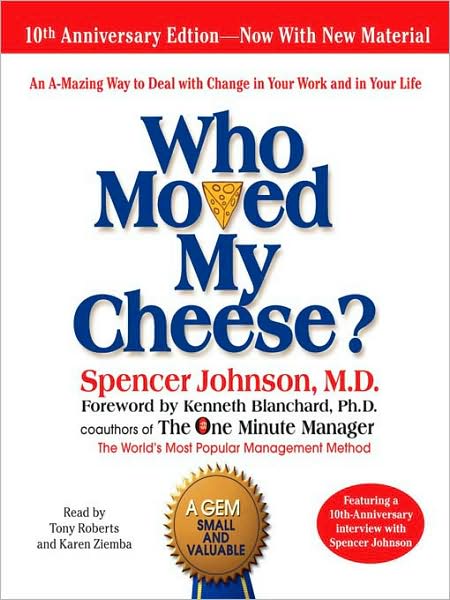
I think this is a fantastic analogy for dealing with change, challenge and fear in life. It is a quick read and helps one reflect. Try to pick out which character you might be and how it can be applied to your life, hopefully you already have your cheese and know how to keep up with it :)

Have a happy and HEALTHY holiday season everyone!

Sunday, December 13, 2009

Rainy Sunday in NYC

I apparently published my last post under my old blog (studentpt.blogspot.com) all about the new blogger posting guidelines, worth checking out.

Here are some articles that were passed on to me that may be of interest to my readers as per the source:

Financial aid for OT's (any OT's out there?)

This is an interesting website that has some very good info and a while back sent me an updated e-mail as part of their newsletter questioning what physio's know about strength and conditioning... hmmm... quite a bit! This is a British website and I am curious to see how different it is out there: http://www.sportsinjurybulletin.com/

Gretchen Reynolds has written some pretty awesome pieces for the Times, check her out here.

And please support a group looking to help those affected by arthritis: http://www.mdjunction.com/arthritis

Wednesday, December 2, 2009

I'm Back!

Had a great trip and now it is back to business...

Just saw this great article about neuroplasticity which is a secret interest of mine combined with the ACL which is very dear to my own knee... here is the conclusion, but make sure to check out the whole article and after I get a chance to read it further I may put up a more in depth review... but no promises as I am focused on inflammation right now.

CONCLUSION: The current study reveals that anterior cruciate ligament deficiency can cause reorganization of the central nervous system, suggesting that such an injury might be regarded as a neurophysiologic dysfunction, not a simple peripheral musculoskeletal injury. This evidence could explain clinical symptoms that accompany this type of injury and lead to severe dysfunction. Understanding the pattern of brain activation after a peripheral joint injury such as anterior cruciate ligament injury lead to new standards in rehabilitation and motor control learning with a wide application in a number of clinical and research areas (eg, surgical procedures, patient re-education, athletic training, etc).


http://ajs.sagepub.com/content/37/12/2419.abstract